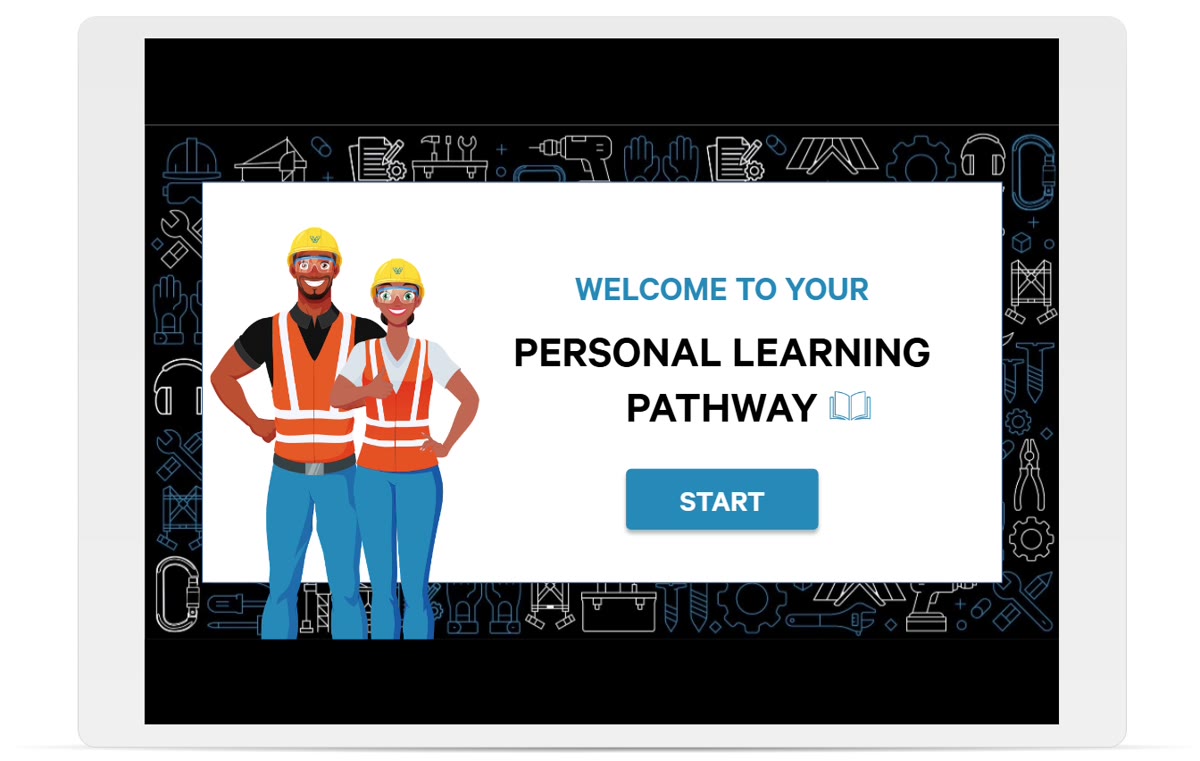
Project Overview
The Literacy Personal Learning Pathway (PLP) was developed as part of a wider apprenticeship support initiative designed to replace the traditional Literacy and Numeracy Adult Assessment Tool (LNAAT) process. The goal was to create a more engaging and learner-centred experience that could accurately identify literacy capability levels while providing meaningful support pathways for apprentices across construction, scaffolding, roofing, and related trades.
Developed in Articulate Storyline 360, the assessment formed part of a larger learner support ecosystem, with learner results reported to internal systems and used to generate targeted support interventions and resources.
The Challenge
The stakeholder had strict requirements around maintaining alignment with LNAAT literacy standards while creating a modern, engaging digital experience.
- Progressively scaffold learners from Level 1 through Level 3 literacy competencies.
- Measure comprehension, interpretation, and inference skills.
- Assess a learner’s ability to navigate between multiple information sources.
- Maintain organisational branding standards throughout the experience.
- Ensure all content reflected authentic workplace situations.
- Capture and report learner performance data into internal systems.
- Remain accessible and engaging for learners with diverse educational backgrounds and learning needs.
One of the most challenging requirements involved Level 4 literacy-style behaviours, where learners needed to demonstrate the ability to locate, compare, interpret, and infer information from multiple documents rather than simply recalling facts from a single source.
My Approach
To meet these requirements, I designed the assessment around realistic workplace scenarios and document-based interactions that reflected the environments apprentices encounter on construction and work sites.
Working closely with Subject Matter Experts (SMEs), all questions, scenarios, and supporting content were reviewed and approved to ensure relevance to construction environments, scaffolding operations, roofing activities, workplace health and safety requirements, and trade-specific documentation and communication.
Rather than presenting learners with long passages of text, I created a branded but simple navigation experience within Storyline 360. Learners interacted with safety information and site-based resources that mirrored real-world materials.
- Navigate between multiple information sources.
- Compare information across documents.
- Interpret workplace instructions.
- Identify relevant details.
- Draw conclusions based on available evidence.
Storyline variables, triggers, navigation controls, and assessment logic were used to create a seamless experience while maintaining reporting requirements for integration with internal learner support systems.